The Difference Between Holding Hair and Stressing Hair
Not every hair tie, clip, or accessory affects your hair the same way. Some simply hold your hair in place, while others quietly stress it through tension, pressure, and friction. The difference may seem small in the moment, but over time it plays a major role in breakage, thinning, and overall hair health.
What It Means to “Hold” Hair
Holding hair means securing it without changing its structure or causing unnecessary strain.
A true holding effect:
Keeps hair in place without pulling
Applies even, gentle support
Allows some natural movement
Does not create pressure points
When hair is simply held, it remains in its natural state underneath the accessory, with minimal disruption to the strand.
What It Means to “Stress” Hair
Stressing hair happens when the accessory creates ongoing tension or friction.
This includes:
Tight gripping that pulls at the roots
Uneven pressure concentrated in one area
Constant resistance when hair moves
Repeated bending or creasing of strands
Unlike holding, stressing changes how the hair behaves while it’s secured — often forcing it into a strained position for long periods.
The Key Difference: Freedom vs. Restriction
The simplest way to understand it:
Holding = support without resistance
Stressing = force that restricts natural movement
Hair that is being held can still relax under the surface. Hair that is being stressed remains under constant mechanical load.
How Stress Builds in Everyday Accessories
Many common hair tools unintentionally stress the hair.
Tight Hair Ties
These concentrate pressure into a small area, creating a strong grip that can weaken strands over time.
Hard Clips
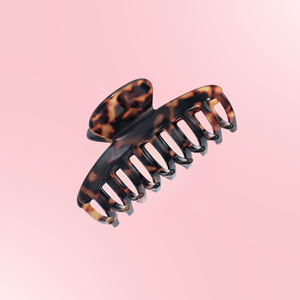
Rigid pressure points can bend or flatten hair repeatedly in the same spot.
Rough Materials
Friction from coarse fabrics or elastics increases cuticle damage during movement.
What Hair Stress Does Over Time
When hair is repeatedly stressed instead of gently held, it can lead to:
Breakage at consistent points
Thinning in high-tension areas
Creasing or permanent bends
Weakened elasticity
Increased frizz and roughness
These effects build slowly, making them easy to overlook at first.
Why Your Hairline Is Often First to Show Damage
The hairline is especially sensitive to stress because:
It has finer, more delicate strands
It is often under repeated tension from styles
It experiences frequent accessory pressure
This is why thinning or breakage often appears around the front before other areas.
The Role of Friction in Stress vs. Holding
Friction intensifies stress.
When hair is both:
Held tightly and
Rubbing against a rough surface
damage accelerates.
Holding alone doesn’t create friction. Stress often does.
How to Tell If Your Hair Is Being Stressed
You may notice signs like:
Headache or discomfort after tying your hair
Visible marks when you take your hair down
Short broken hairs near elastic points
Increased frizz where accessories sit
These are indicators that your hair is under too much mechanical force.
How to Shift From Stressing to Holding
The goal is to secure hair in a way that supports, not strains.
Use Softer, Flexible Accessories
Materials that adapt to hair movement reduce pressure points.
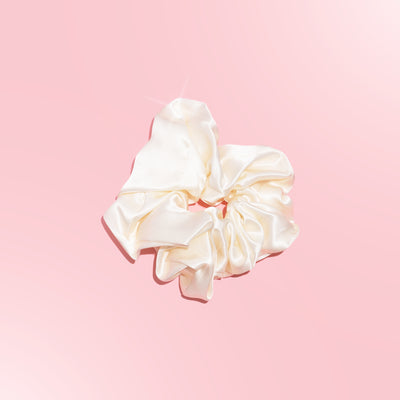
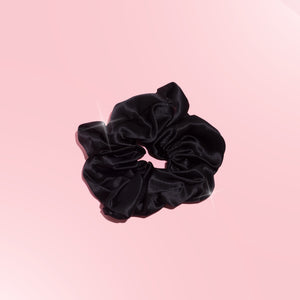
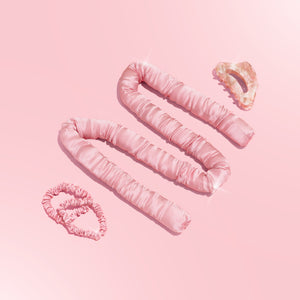
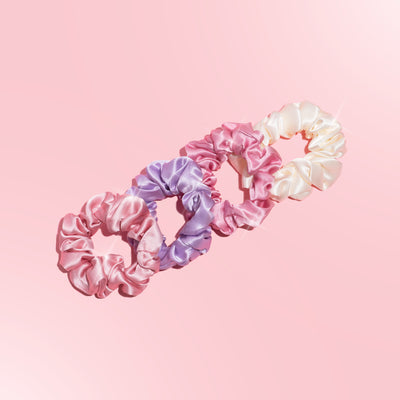
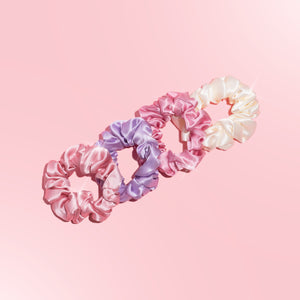
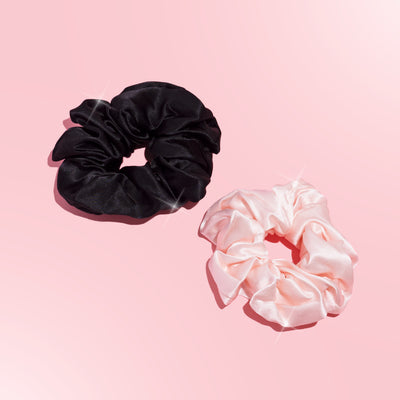
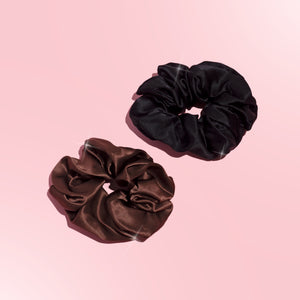
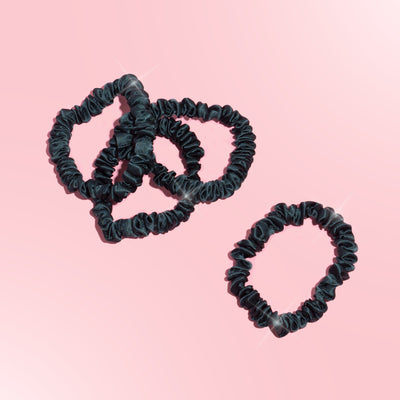
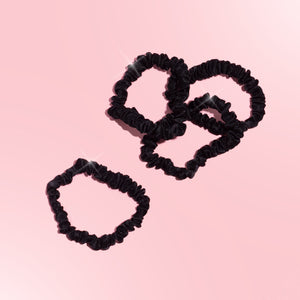
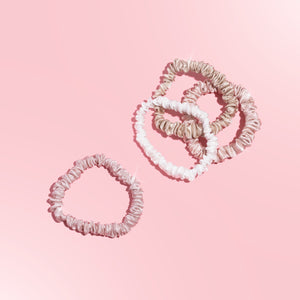
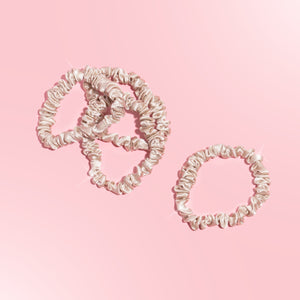
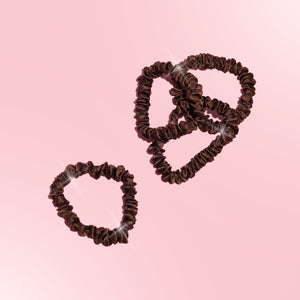
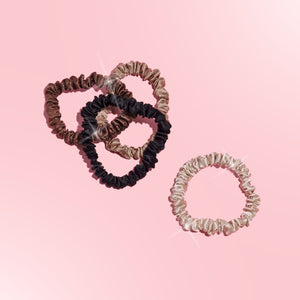
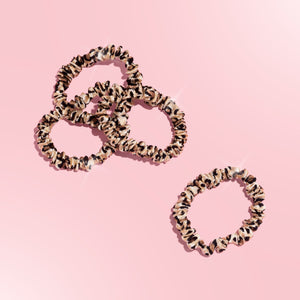
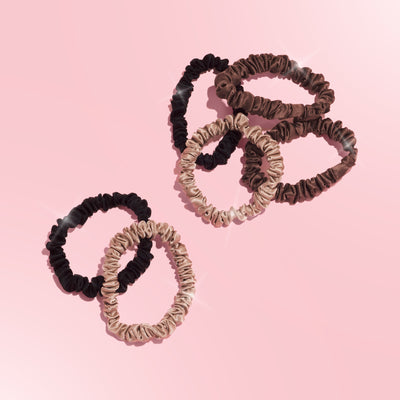
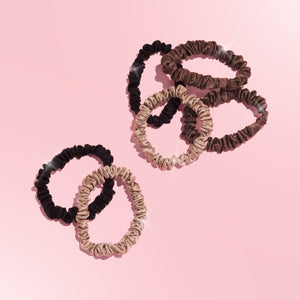
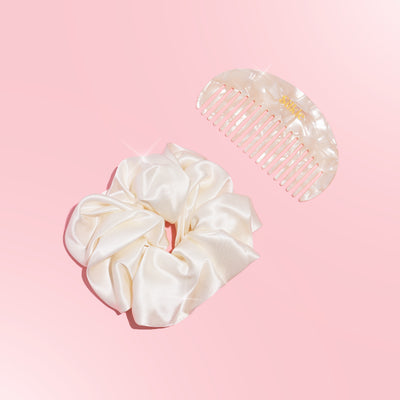
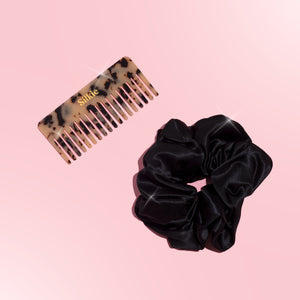
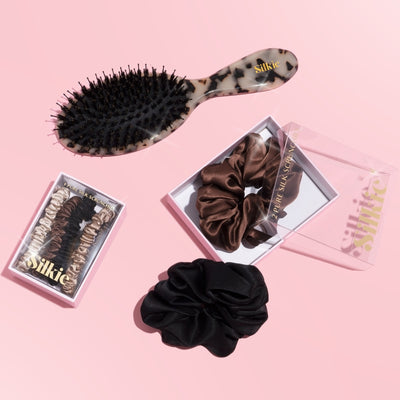
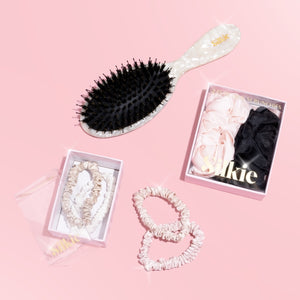
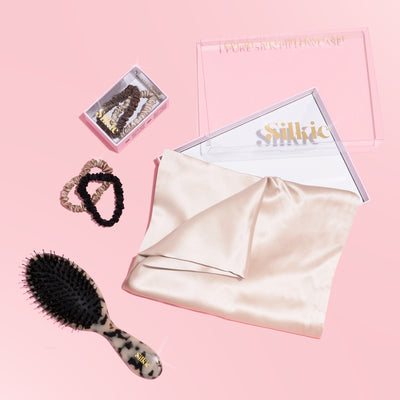
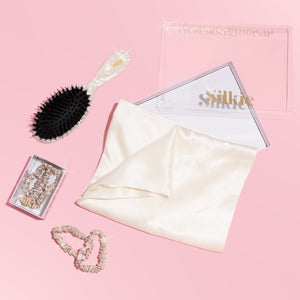
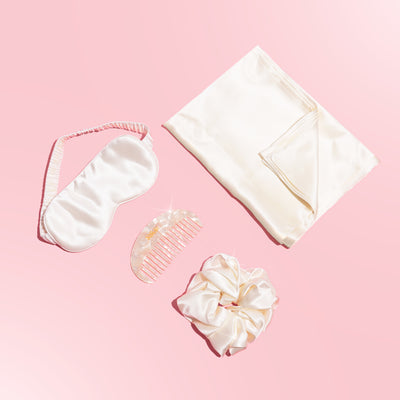
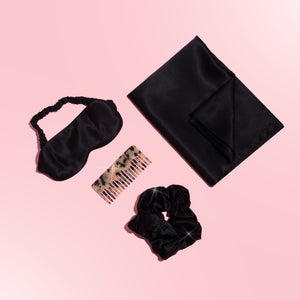
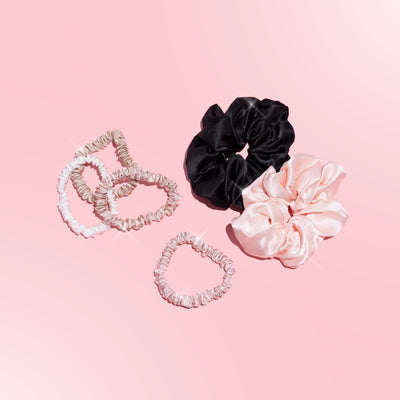
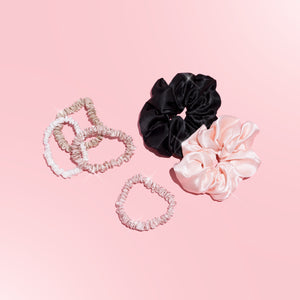
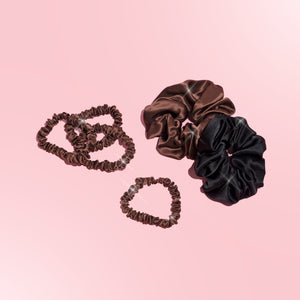
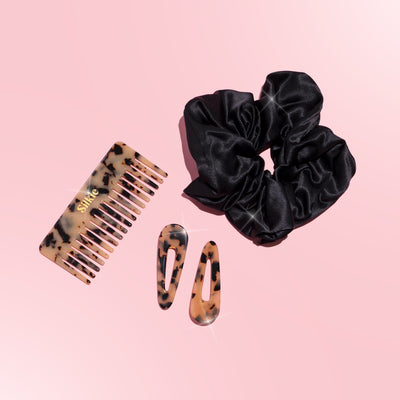
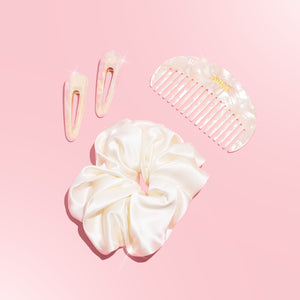
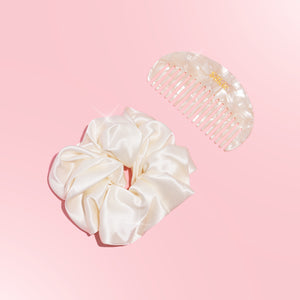
Silkie’s silk scrunchies are designed to hold hair gently without tight compression or pulling.
Avoid Repeating the Same Tension Points
Changing hairstyle positions helps distribute stress more evenly across the scalp.
Reduce Over-Tight Styling
Looser styles can still be secure without creating unnecessary strain.
Detangle Before Securing
Smooth hair is less likely to experience uneven tension when tied.
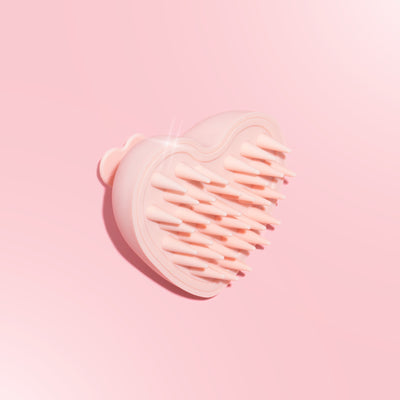
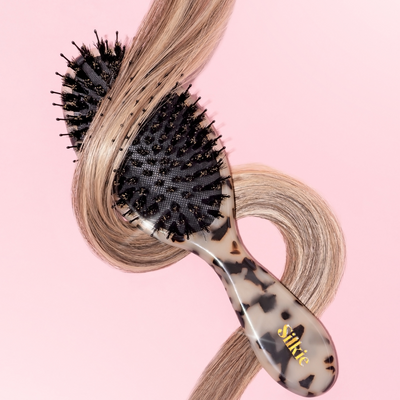
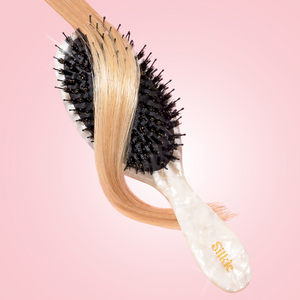
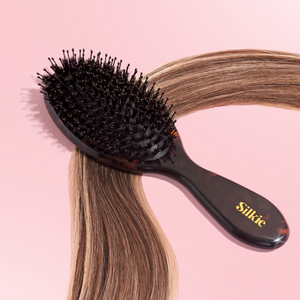
Silkie’s hair brush is designed to detangle gently while minimizing pulling and stress on the strands.
Overnight Holding vs. Overnight Stress
This difference becomes even more important during sleep.
Hair that is tightly secured overnight is more likely to experience:
Constant pressure
Friction from movement
Creasing and breakage
Using a smoother sleep surface helps reduce this effect.
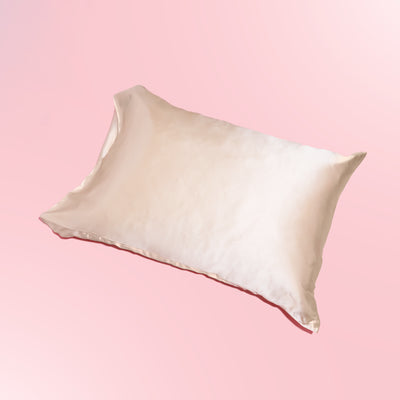
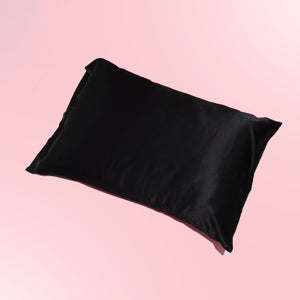
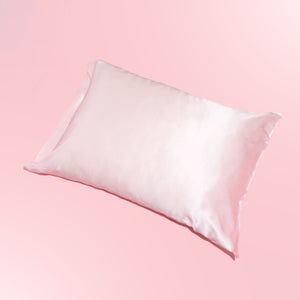
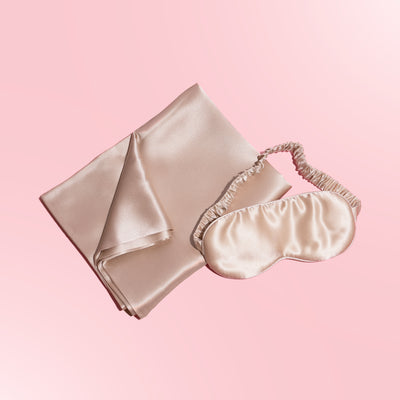
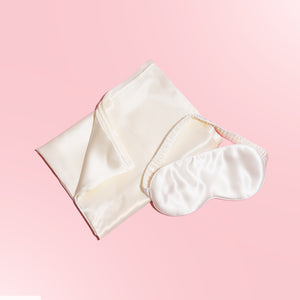
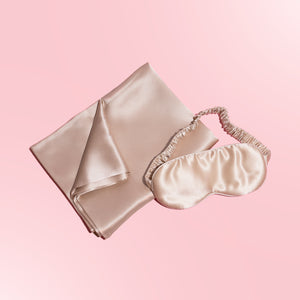
Silkie’s mulberry silk pillowcases are designed to reduce friction, allowing hair to rest more naturally during sleep.
Small Shifts, Long-Term Protection
The difference between holding and stressing hair often comes down to design and intention.
When hair is only held:
It retains strength
It moves naturally
It experiences less long-term damage
When hair is stressed:
Weak points develop
Breakage becomes more likely
Texture becomes uneven over time
Support Healthier Hair With Silkie
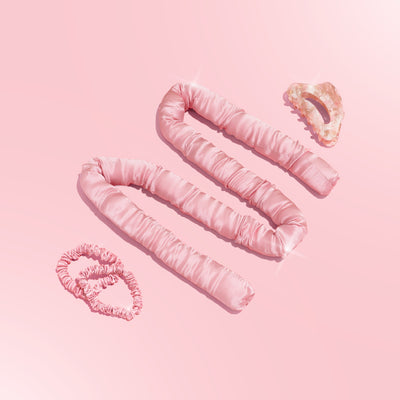
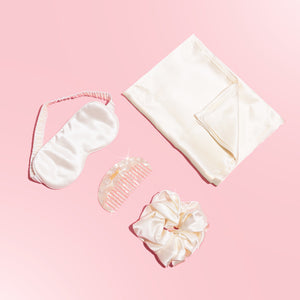
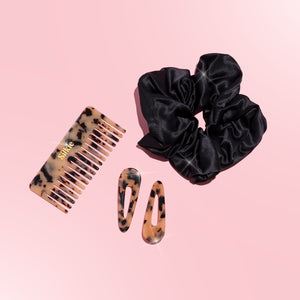
Silkie’s silk scrunchies, pillowcases, and hair tools are designed to hold hair — not stress it. By reducing friction and tension in everyday routines, these essentials help protect your hair’s strength, smoothness, and long-term health.
Explore the full collection at www.shopsilkie.com and experience the difference between simply holding your hair and truly caring for it.